Showing posts with label Drinking Water. Show all posts

Saturday, April 23, 2011

World Water Day: Drop by drop


By Saleem Shaikh

March 20, 2011

In Pakistan, water and sanitation-related diseases account for 60 per cent of the total child mortality cases. Of these, diarrhoeal diseases alone are estimated to kill more than 200,000 children under five years of age every year.

The annual mortality rate for children under five years old was estimated to be 117 deaths per 1,000 children in 1990-91. Though the numbers have reduced to 75 deaths for every 1,000 live births in 2007, according to Pakistan Millennium Development Goal Report (PMDGR) 2010, the figure is still unacceptably high.

Unsafe drinking water, inadequate sanitation and poor hygiene are the underlying causes of diarrhoea in children, mainly in the lower income groups. The combination of unsafe water consumption with poor hygiene practices causes diseases, which further exacerbate their economic conditions, due to high cost of medical aid.

Access to sanitary latrines at household levels is very low throughout the country. According to estimates, only 42 per cent people have access to safe latrines throughout Pakistan (65 per cent urban and 30 per cent rural).

Access to safe drinking water is also a critical health issue in the country. The projected population growth for the next ten years — from over 160 million to 221 million people — will exert further pressure on water demand, making access to safe water even more of a challenge.

Data indicate that just 65 per cent of the population has access to clean drinking water and that urban access to potable water is significantly higher than rural access — 85 per cent urban and 55 per cent rural.

Delivery of potable water supply is constrained by the inability of taluka/tehsil municipal administrations (TMAs), which are now responsible for providing safe water and to manage sustainable water systems in their respective jurisdictions.

Poor hygiene practices, such as lack of hand washing with soap at multiple critical times are common phenomena in the country, dangerously so in rural areas. Besides, there is a lack of awareness about what ‘clean’ water means. For instance, most believe that if water is clear and odourless it is suitable for drinking. This misconception could present a barrier for the acceptance of household water treatment methods or community water filtration plants. Until recent years, environmental health programmes have not given behaviour change the importance it is due.

Research has shown that mere access to water and sanitation may bring little or no behaviour change impact. Only a combination of clean water, improved sanitation and hygiene behaviours can ensure that in due course, the impact will appear in the district, national, and international statistics.

Even in developed urban areas, with organised administrative structures, resources and high water coverage, the quality of water can be so poor that waterborne epidemics are common. For instance, in Lahore and Karachi, the most developed cities in Pakistan, more than 40 per cent of the water supply is unfiltered, 60 per cent of industrial effluents are untreated, and groundwater sources are being contaminated by human waste and pollution.

However, there is a mounting concern about, and response to, the rapidly aggravating crisis regarding safe water and sanitation.

Halving the proportion of people without access to safe water by 2015 is the 10th MDG target. Access to clean drinking water, particularly to the poorest of the poor, remains a daunting challenge, especially at a time when the country is reeling under virulent water scarcity and rising surface water contamination. The country is also daunted by low coverage of safe drinking water supply, which is a major cause of waterborne diseases.

According to the PMDG 2010 report, water supply coverage has increased to 65 per cent in 2008-09 from 53 per cent in 1990. However, the target set for 2015 regarding the water supply reach is 93 per cent; this is hard to achieve without huge investment in water supply infrastructure. Development experts believe that given the current trends and the country’s current financial woes it is impossible to meet the target.

Although the country’s sanitation situation has increased by 100 per cent to 63 per cent in 2008-09 from 30 per cent in 1990, it is a long way from the target of 90 per cent access to safe sanitation to be met by 2015.

Limited resources and poor financial outlook for Pakistan in the next couple of years, make meeting the MDG targets a daunting challenge to the country. However, the government must endeavour and utilise all energies and financial resources towards achieving these goals because their attainment would certainly improve the country’s socio-economic face.

Many development experts believe that these challenging goals, particularly ‘Eradicating Extreme Poverty and Hunger’ as well as ‘Reducing Child Mortality’ can be met by pursuing an agenda of rapid inclusive economic growth, introducing concrete reforms, continuity and sustainability of policies and programmes and increased participation of the communities in the overall development process.

Weblink: http://www.dawn.com/2011/03/20/world-water-day-drop-by-drop.html

Monday, March 7, 2011

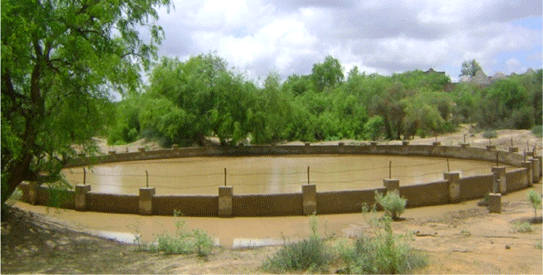
Rainwater harvesting in parched Tharparkar


By Saleem Shaikh


THE Tharparkar district receives on an average 100mm rain every year, which should be sufficient for its drinking and agriculture purposes. But much of it goes waste due to lack of rainwater harvesting and poor water conservation facilities.

During August last year heavy rains in the Thar Desert recharged parched shallow wells, raised water table in deep wells and filled household cisterns. But, after four months, the Tharis were without sufficient water even for drinking, and many had to walk miles to fetch water. Herdsmen had to take their livestock to barrage areas to avoid mortality among them due to water shortage.

“When it rained heavily, it turned our dusty and arid villages in the district into an oasis with lush green foliage and plenty of water to drink and take bath. It also turned our dried-up rangeland into green meadows and pastures for our cattle. But the accumulated rainwater evaporated within a few months and we had to walk for 4-5 miles thrice a week to fetch water from deep wells. Water of such wells is brackish, contaminated and injurious to both humans` and animals` health,” said Ali Akbar Rahimo of the Association for Water, Applied Education and Renewable Energy in Nagarparkar.

Thar normally experiences drought every third year and famine after each decade, triggering mass migration of peasants to irrigated areas in lower and central Sindh in search of fodder, labour and water. A large number of cattle also die during such arduous journeys.

According to a study of the Pakistan Council for Research on Water Resources (PCRWR), the entire Thar Desert receives around one trillion litres of rain annually “ sufficient, if stored, for three years to meet domestic water needs of the Tharis and their livestock. But, more than 95 per cent of it is lost under sand dunes or evaporates in the sizzling summer due to inadequate storage and rainwater harvesting facilities.

“Even if 0.25 per cent of the rainwater is conserved or harvested, it can meet the domestic water needs of the entire human population and livestock of the area,” said water conservation experts of the PCRWR.

The councils` study found out that hardly 0.06 per cent of the overall annual rain water is harvested by Tharis in household cisterns or in other indigenous ways. However, the study suggests that the water shortage problem can be addressed by improving capacity of rainwater harvest by scaling it up from 0.06 per cent to at least 0.25 per cent of the rainfall.

The Tharparkar district, spread over nearly 22,000 square kilometers, is a chronically poor with an estimated population of 1.2-1.3 million. Of them, 95 per cent people live in and around 2,000 villages.

In a normal day, members of each household spends around 4-6 hours in fetching 4-5 pots (50-60 litters) of water from wells However during the dry season they collect water throughout the day including at nights.

However, rains in Thar invigorate socio-economic activities as people start cultivating crops, bringing back their livestock in herds from barrage areas and storing rainwater as much as possible.

Usually Tharis prepare their fields every year much before the rainy season starts by ploughing and broadcasting seeds of millet (bajhri), cluster bean (guar), sesame (tir), kidney bean (mooth), cow peas (Choonra), musk melon (gidro), water melon (hindano), squash melon (meho), wild cucumber (chibbhar), amaranths (mariro), digeria (lular) and other wild plants. The land in Thar is so fertile that once the ploughed fields receive the first shower, they turn green.

Prior to the rains, the Tharis also clean ditches and depressions locally known as Tal and Tarayoon for storing rainwater.

This water is used both for domestic and drinking purposes.

But, the accumulated rainwater in these ditches and depressions lasts only for three to four months. And for the rest of the eight months of the year, they depend on brackish water of wells, which results in health hazards among humans and livestock.

Often the outbreak of diseases among livestock deepens poverty situation in Thar manifold, as livelihood of the poor 70 per cent depends on livestock rearing.

Mukesh Suther, an Umerkot-based rainwater conservation expert, remarked that “building large ponds and laying a geo-membrane sheet under these (ponds) to stop seepage and covering them with roofs can be of great help in slowing down evaporation of stored rain water during the sizzling summer days.”

He said the government should introduce these low-cost techniques to harvest huge stocks of water, which can help meet needs of the people throughout the year rather than spending millions of rupees on schemes, which have huge recurring costs for maintenances.

Water conservation experts of PCRWR have suggested that piped roof water harvesting, hamlet level chonra pond, hamlet level nadi pond, chalho pond and dug well recharging system could help conserve huge stock of rainwater. But, introduction and promotion of such water conservation techniques was not possible without one time investment by the government.

A senior official in the water section of the Sindh Planning and Development (P&D) Department said: “Although no initiative for rainwater harvesting in Thar has ever been launched by the provincial government, multi-million rupees schemes for tapping rainwater in the desert area are now under consideration of the department`s planners.

There is possibility that such schemes may be included in the next year`s Annual Development Programme (ADP).”

Weblink: http://www.dawn.com/2011/03/07/rainwater-harvesting-in-parched-tharparkar.html

Thursday, February 24, 2011

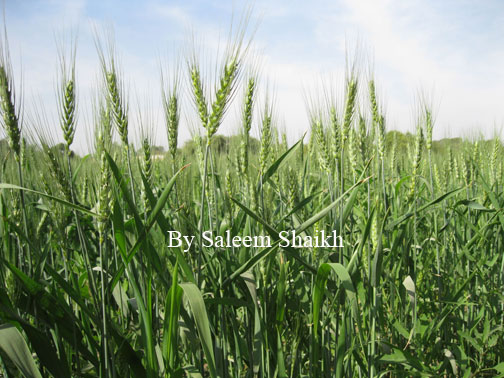
Bumper wheat crop likely in Sindh


By Saleem Shaikh

February 21, 2011

HEAT sowing in Sindh has surpassed the target, and chances for bumper production are bright provided the standing crop receives final doses of water and urea preferably before the end of February.

Wheat harvest usually begins from mid-March in lower Sindh, and is in full swing in April in upper Sindh districts.

In October, the Federal Committee on Agriculture had set production and sowing targets for Sindh at 3.682 million tons and 10,31,000 hectares respectively for the ongoing Rabi season.

Sindh Agriculture Department officials claim that wheat sowing in the province has crossed the target. “Till February 10, the crop had been planted on around 10,81,000 hectares, while cultivation will continue till mid-March, easily touching 11,00,000 hectares,” said Ashfaq Ahmed Soomro, additional secretary, Sindh Agriculture Department.

Officials say that owing to vigorous wheat cultivation activities in districts on the right bank of Indus River, wheat production target would be easily achievable. “We are expecting some 3.8 million tons of crop against 3.682 million tons for the current Rabi season,” they said.

For the ongoing Rabi season, per acre yield target was set at 36.1 maunds. But, Bashir Thebo, Director Statistics wing, Department of Agriculture, said average per acre yield was expected between 40-50 maunds; An average of 60 maunds in some areas, where quality of land was better, and farm inputs were timely available, was also being expected.

“Favourable climatic conditions, availability of quality seeds and fertilisers and luckily no viral attacks are other major positive factors behind vigorous sowing and higher acreage.”

There are also other factors behind the robust sowing such as: “Plans drawn up carefully for achieving the target were implemented in time. All farm inputs and other facilities were made available to growers at market price in proper manner to facilitate cultivation in maximum area,” said Asfaq Ahmed Soomro, additional secretary of the department.

Additional general secretary of the Sindh Chamber of Agriculture (SCA) Muhammad Hussain Khushik warns that the crop may post a decline of 25 per cent if the crop fails to get essential last doses of water and urea in time.

“The recent 23-25 per cent increase in prices of urea and DAP, may leave no option for the growers – particularly small farmers – but to avoid the essential doses,” he feared.

According to the Federal Bureau of Statistics (FBS), in December a urea fertiliser bag of 50kg was selling at Rs850 in most of the wheat growing districts of the province.

But, at present it is being sold at Rs1,200 per bag and reportedly at Rs1,250 per bag in some upper Sindh districts. Besides, DAP prices have also gone up by Rs150-200 per 50kg bag in the past two months. At present, a DAP bag is selling at Rs3,200, the FBS reports says.

Weblink: http://www.dawn.com/2011/02/21/bumper-wheat-crop-likely-in-sindh-2.html

Wednesday, February 2, 2011

Canals` Closure Creates Water Scarcity in Sindh


By Saleem Shaikh

Daily Dawn

January 31, 2011

saleemzeal@gmail.com

THE scarcity of both irrigation and drinking water in many parts of Sindh has sparked protests and rallies by farmers, traders and the people whose day-to-day socio-economic lives and standing crops have been affected.

The water shortage has aggravated following closure of canals during the second week of December for de-silting and repair/maintenance work at barrages, canal heads, and regulators.

On November 23, the federal ministry for water and power had announced canal closure schedule for de-silting and repair from December 26, 2010 to January 31, 2011. The provincial irrigation department and relevant authorities were directed to strictly adhere to the schedule and make alternative arrangements for providing water for irrigation and drinking in their respective provinces.

But, alternative arrangements were not adequate in many areas of Jacobabad, Sukkur, Qambar-Shahdadkot, Hyderabad, Tando Allahyar, Tando Adam, Matiyari, Sanghar, Thatta, Badin and Umerkot districts. In these shortage-hit districts, the underground water has also turned brackish because of closure of the canals.

The Sukkur Barrage and its seven off-taking canals were shut in the first week of January for annual repair and maintenance. But, because of lack of coordination between the office of the barrage`s chief engineer and municipal administration, the city and its adjoining areas suffered acute water shortage.

In anticipation of shortage in the Sukkur region, the provincial government assigned the North Sindh Urban Services Corporation (NSUSC) to arrange supply of water to people of Sukkur, Rohri and adjoining areas through tube-wells in a week`s time.

The NSUSC is a public limited company working under the local government. But, a dispute broke out on January 5 over drilling of wells for alternative supply of drinking water when irrigation officials forcibly got the corporation`s drilling work halted and the machinery removed from the sites.

When NSUSC`s Sukkur director Abid Hussain asked as to why they had stopped their work, the irrigation officials told him to approach the Executive Engineer Sukkur Barrage Zareef Khero on this issue.

“But, Zareef Khero when contacted said he had no concern with it,” a NSUSC official said. Meanwhile, this scribe also tried to approach the relevant district government officials to find out their version, but they refused to comment.

A Sukkur town municipal official told this scribe that “against the daily requirement of 16 million gallons of water, the city is getting only nine million gallons.”

The residents complain that much of it is contaminated as it is supplied through leaked and damaged supply lines, which run parallel to the drainage pipelines.

People of different localities fetch expensive water from hand pumps installed in the low-lying areas of the city.

NSUSC Sukkur Assistant Director Manzoor Ahmed Bachkani said the situation was slowly improving in some parts of the city. “Now the closure of Sukkur Barrage is over and enough water is being supplied to the affected residents,” he remarked.

On December 20 last year, Chief Engineer Irrigation of the Kotri Barrage had notified for the information of landholders, cultivators, Hyderabad`s Water and Sanitation Authority (Wasa), civic agencies of adjoining districts and all concerned that the barrage canals would remain closed from December 25 to January 01 for normal inspection, maintenance and necessary repairs. During this period there would be no water flowing in any of the barrage`s off-taking canals namely Akram Wah (Lined Channel) Old Phuleli (Pinyari), New Phuleli (Phuleli), Kalri Baghar Feeder Upper, Wadhu Wah and Fasadi Wah.

But, the Hyderabad`s Water and Sanitation Agency and district government officials and the TMOs of Thatta, Badin and other districts failed to make arrangements for alternate supply.

The people of Hyderabad, Tando Mohammad Khan, Tando Allahyar, Matiari, Thatta and Badin districts have held officials of Taluka municipal administrations responsible for their water woes.

According to reports, more than 800,000 people are facing water shortage in the said districts.

Badin, a town of more than 200,000 people, is the worst hit in lower Sindh, facing water shortage for more than 45 days. Standing vegetable and Rabi crops in and around the area are also at the risk of being damaged.

Lar Abadgar Board`s Amin Memon said: “The locals never opposed de-silting and maintenance work at the Qazia Canal, which is the chief source of drinking water for the people of Badin city and its adjoining areas. But alterative arrangements for water supply should have been made by the TMA.”

Water scarcity had equally affected the people and farmers as seedlings of tomato and other vegetables were drying up due to zero availability of water in canals and distributaries. Besides, fish farmers have also suffered massive losses because of short supply of fresh water,” he pointed out.

Meanwhile, senior officials at the Kotri Barrage told this scribe on phone that water shortage situation downstream Kotri Barrage districts was unlikely to improve before mid-February as the repair/maintenance work would take another two or three weeks.

Weblink:

http://www.dawn.com/2011/01/31/canals-closure-creates-water-scarcity-in-sindh.html